
Pure Objectivity in Science is a Myth. And has consequences for Science Communication
Pretending science is “purely objective” can backfire. It hides the values and power relations that shape research, encourages a top-down “deficit” view of the public, and makes scientific authority fragile—because any error can be framed as proof that everything is false. Instead, Sara Giordano, associate professor at Kennesaw State University (Georgia, USA), calls for more democratic, context-aware ways of doing and communicating science, where evidence matters, but communities most affected by research also have a real voice.
Giordano wrote about these topics in “Scientific objectivity is a myth – cultural values and beliefs always influence science and the people who do it”, an article published in The Conversation on September 4, 2025. She trained as a neuroscientist, but her political experiences after September 11—and later her encounters with feminist and reproductive justice activism—pushed her to reconsider what “objectivity” means, who science is for, and how knowledge gets made and communicated.
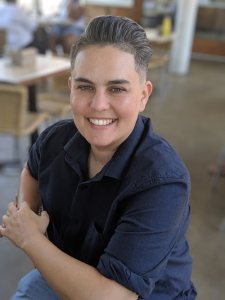
Sara Giordano is Associate Professor of Interdisciplinary Studies, Kennesaw State University (USA)
Why did you become interested in objectivity in science?
My interest came from a collision between my scientific training and political life. I started a PhD in neuroscience in 2001, right before September 11. Watching the U.S. response—nationalism, wars, attacks on “others”—shook me, especially given my family history (including Jewish grandparents who survived the Holocaust). Science initially felt like the “safe” realm: objective, separate from politics.
That changed when activists I met through anti-war and justice movements challenged my assumption that science has no politics. An intersex activist gave me Anne Fausto-Sterling’s book Sexing the Body, and reproductive justice organizers helped me understand the history of eugenics and its scientific entanglements. I felt betrayed by my training: how could I be producing knowledge and never be taught these histories?
At one point, I wanted to quit science entirely, but activists urged me to stay—because institutions also need scientists who can interrogate their own assumptions. I finished the PhD while trying to contextualize my research historically and politically, and I eventually found a stronger home in interdisciplinary and feminist studies.
Does science communication need “pure objectivity” to work?
I don’t think so. The “myth of objectivity” is a problem because it isn’t true, and forcing it creates brittle communication. If you tell people “this is the truth because science says so,” then any mistake—any revision, uncertainty, or correction—can be used to delegitimize the whole enterprise.
A lot of science communication also assumes a deficit model: the public is ignorant and needs to be managed. But people outside science often understand complexity better than scientists give them credit for. Instead of trying to strip politics out, we should acknowledge that science is a cultural product shaped by values and power, while still taking evidence seriously.
Part of my teaching goal is to make students feel as comfortable critiquing science as they are critiquing films: you don’t need to be a filmmaker to talk about plot, lighting, or acting; likewise, you shouldn’t need a PhD to ask smart questions about research. That doesn’t mean “everyone knows better than experts,” but it does mean dialogue is healthier than preaching.
Can you give an example of how “science communication” can mislead—even without conspiracy theories?
We can examine how numbers are framed in corporate medical science. In weight-loss drug coverage, for example, a company press release promoted a “20% improvement” in heart-related outcomes. But when you look at the reported figures, the difference was closer to something like 8% versus 6,5%—an absolute change of 1,5 percentage points. “20%” comes from a relative comparison (1,5 divided by 8), which sounds dramatic, but it can obscure what a person might actually experience—especially when side effects and uncertainty are involved. You can find more details on this example in the thorough analysis conducted by Ragen Chastain that made me reflect deeply on absolute vs. relative risk weight loss.
The deeper issue isn’t only that companies want profit—that’s expected. What troubled me is how easily that framing gets repeated by science communicators and reporters, without basic interrogation. So while we rightfully worry about extreme COVID conspiracies, we also need to notice how mainstream communication can normalize profit-driven distortions that harm people at scale.
Why do younger science communicators still default to top-down messaging?
I can’t claim one definitive answer, but I think it’s connected to how dominant political structures reproduce themselves. The “dominant politics of science” largely track the dominant politics of Western modernity—deeply tied to colonial histories and institutions that define what counts as legitimate knowledge.
Even when critiques emerge, institutions often adapt without changing the underlying story. For instance, we now highlight marginalized contributors to major scientific achievements (like space exploration) as a corrective—but that can leave the larger political questions untouched. There were people at the time—especially Black Americans in the U.S.—who asked why vast resources went to the moon while poverty and injustice persisted on Earth. Today, the narrative often becomes “look, we included more people in the story,” rather than “should we rethink what we found, why, and for whom?” That kind of structural pressure can pull even new generations back into familiar, managed, top-down forms of communication.
Did COVID change how we communicate science—or how we act on inequality?
COVID exposed things we already knew: crises hit marginalized and poor communities hardest. But the danger lies in how the story is told afterward. If we frame unequal suffering as mainly the result of “poor people not trusting science,” we hide the structural realities—work conditions, housing insecurity, access, wealth, and the way health and financial stability are inseparable.
In the U.S., essential and low-paid workers had to keep working, and class-based COVID data was often poorly tracked. Meanwhile, the public conversation narrowed to vaccines as the solution, instead of addressing the social stratification that made people vulnerable in the first place. Vaccines mattered, but treating them as a substitute for structural change was a mistake.
One personal moment clarified this for me: I met a homeless man who refused vaccination and claimed he was “too strong.” My instinct was to correct him. Later, I realized that living outdoors may have reduced his risk compared to crowded shelters—and that vaccine side effects could actually be dangerous if you’re sleeping on the street. The point wasn’t that vaccines are “bad,” but that a one-size-fits-all message misses lived realities. COVID could have opened broader democratic possibilities—there were moments of mass mobilization and political rethinking—but power often works to redirect attention and divide people, rather than confront root causes. To truly advance science and public health, we must listen to those most affected, challenge old power structures, and commit to more democratically shared knowledge.

